Skip to content
Tayyab Hassan

UAE · ERP and business automation

ERP and business automation for Dubai businesses

Custom ERP and business automation for Dubai companies that have outgrown spreadsheets and WhatsApp approvals.

Overview

Dubai businesses grow quickly, often across several entities, free zones and trading partners, and the back office tends to run on spreadsheets, shared drives and chat threads long after it should have been systemised. I build custom ERP modules and automation for growing Dubai companies, one module at a time, so each piece pays back before the next begins.

The Dubai market

Dubai is a regional hub for trade, logistics, retail, hospitality and professional services, with a large import and re-export sector centred on its ports and free zones. Many companies are owner-led, operate in more than one language and deal with suppliers and customers across several countries. Staff turnover is high in some sectors, which makes documented, system-held processes more valuable than know-how that lives in one person's head. I am planning a move to Dubai, and today work with Dubai companies remotely, with only a one-hour difference from my current time zone.

Industries

Industries in Dubai and where the manual work hides.

Trading and distribution

Import, stock and re-export flows with many suppliers, shipments in transit and purchasing that depends on one person's memory.

Logistics and freight forwarding

Quotes, job files and invoicing spread across emails and spreadsheets that an ERP can pull into one job record.

Retail and e-commerce

Several sales channels, branches and warehouses that need one stock and sales view.

Hospitality and food service suppliers

Recurring orders, delivery routes and credit accounts that depend on quick, accurate invoicing.

Professional services and real estate

Approvals, contracts and client onboarding that move through chat and email rather than a tracked workflow.

What I build

What I build for Dubai.

A custom ERP is built module by module, so the first piece is useful in weeks rather than after a year-long programme.

Custom ERP modules

Purchasing, inventory, sales, finance handoffs and HR flows built around how your business actually runs.

Approvals and workflows

Requests, sign-offs and handoffs that move on their own and leave an audit trail, instead of living in chat threads.

Integrations

Your accounting tool, e-commerce channels, couriers and spreadsheets connected so data is entered once.

AI agents for data work

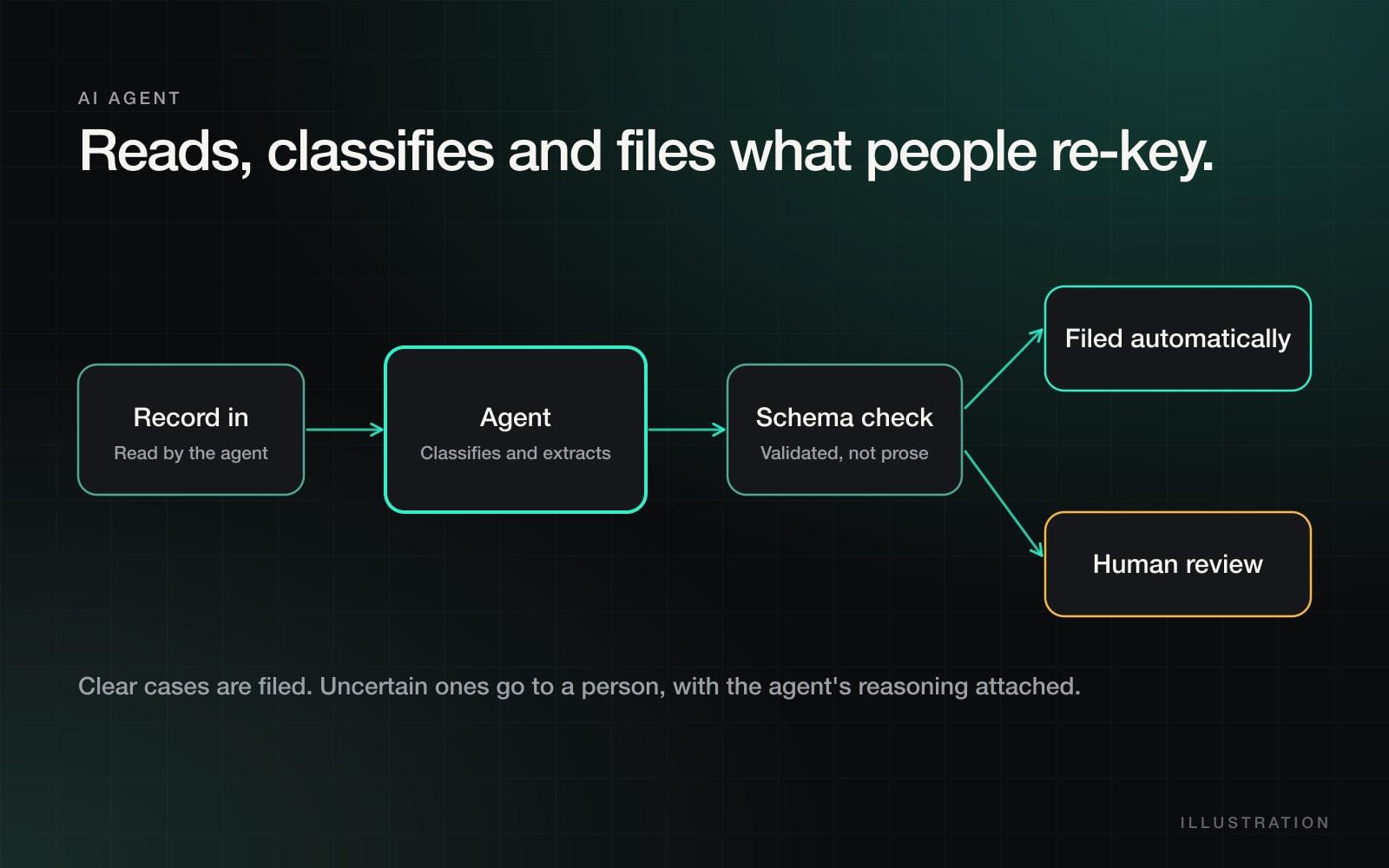
Reading documents, emails and invoices into structured records, with a review queue for anything ambiguous.

Reporting and dashboards

Management numbers across departments in one place, built on the same data the teams work in.

Handover and support

Documentation, training and monitoring, so the system belongs to your team and not to me.

Local considerations

What Dubai businesses need to get right.

VAT

The UAE charges value added tax at a standard rate of 5 percent, administered by the Federal Tax Authority. Businesses must register once taxable supplies pass the mandatory threshold, and may register voluntarily below it. Some free zone transactions can be treated differently, so the rules depend on the zone and the type of supply. A good ERP records VAT per line, supports tax invoices and keeps the data your accountant needs for returns. Confirm current thresholds and treatment with a qualified UAE tax adviser.

Time-zone overlap

The UAE uses Gulf Standard Time, which is four hours ahead of UTC all year with no daylight saving. From Pakistan I am one hour behind Dubai, so working days overlap almost fully. Business weeks in the UAE differ from the Western pattern, so I plan around your working days and any Friday arrangements.

Other things to plan for

  • Many Dubai companies work in English and Arabic, so documents, invoices and screens may need bilingual support.
  • The UAE is rolling out electronic invoicing requirements, so any finance-related module should be designed to adapt, and the current timeline should be confirmed with your adviser.
  • Companies with several free zone or mainland entities need clear reporting by entity, and a system built with that in mind from the start.

General information only, not tax or legal advice. Confirm rates and rules with your accountant before acting on them.

Relevant work

Case studies that fit Dubai.

Chosen for industry fit, not because the work was done in Dubai. I work remotely, and these are all work I shipped.

ERP

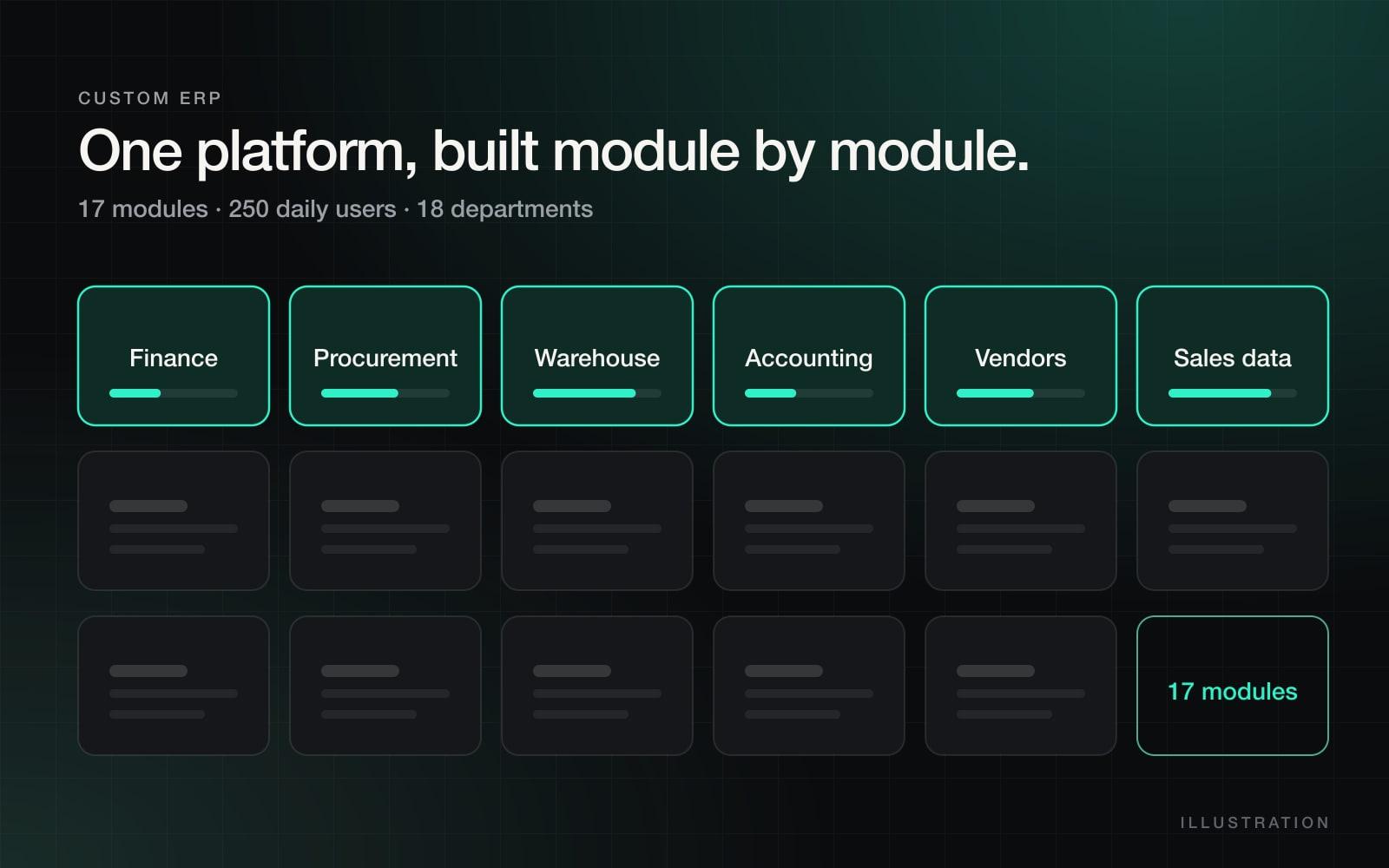
A 17-module ERP that 250 people use every day

One system replacing a decade of parallel spreadsheets at Amazify, built module by module across 18 departments without stopping the business, and maintained as their web partner for four years since.

$20k/moSaved in subscriptions17Modules shipped
Multi-department operations2024
Automation

An AI agent that removed ~100 hours of manual data work a month

A review-backed agent that reads, classifies and files the records a team used to copy by hand, with a human check on anything it is unsure about.

~100/moManual hours removedExceptions onlyWork reviewed by a human
Operations / data processing2025

Process

How a project runs, from first call to handover.

  1. 01

    Map

    I watch the work being done, not described, and write down every manual step, including the ones nobody documents.

  2. 02

    Scope

    We choose the module that pays back first and agree a fixed scope, price and date.

  3. 03

    Build

    Short cycles with working software in front of your team early, so feedback arrives while it is still cheap.

  4. 04

    Hand over

    Documentation, training and monitoring, with credentials and ownership held by you.

FAQ

Questions about Dubai.

Are you based in Dubai?

Not yet. I am based in Pakistan and work remotely, with a move to Dubai planned. The time difference is only one hour, so the working day overlaps almost entirely, and I can arrange calls to suit your schedule.

Do you build a complete ERP or individual modules?

Individual modules, in order of payback. I have built a 17-module ERP used by around 250 people, but it grew one module at a time, and that is how I recommend starting.

Can the system handle VAT correctly?

It can record VAT per line, produce tax invoices and keep the data your accountant needs. The rules themselves should come from your tax adviser, and I build the system to follow them.

Can you support both Arabic and English?

I can build screens, documents and messages in both languages. The Arabic wording should be reviewed by a native speaker from your team so it fits your business.

What if we use accounting software already?

Then I connect to it rather than replace it. Typically the ERP handles operations such as purchasing, stock and approvals, and passes the financial data to your accounting tool.

How do you handle company data and access?

Access is limited to what each person needs, and the system, hosting and credentials belong to you. I document what was used so access can be removed when the project ends.
Next step

Let's find the manual work in your Dubai business.

Thirty minutes. Bring one process that keeps breaking and we will map what it would take to automate it, whether or not you hire me.