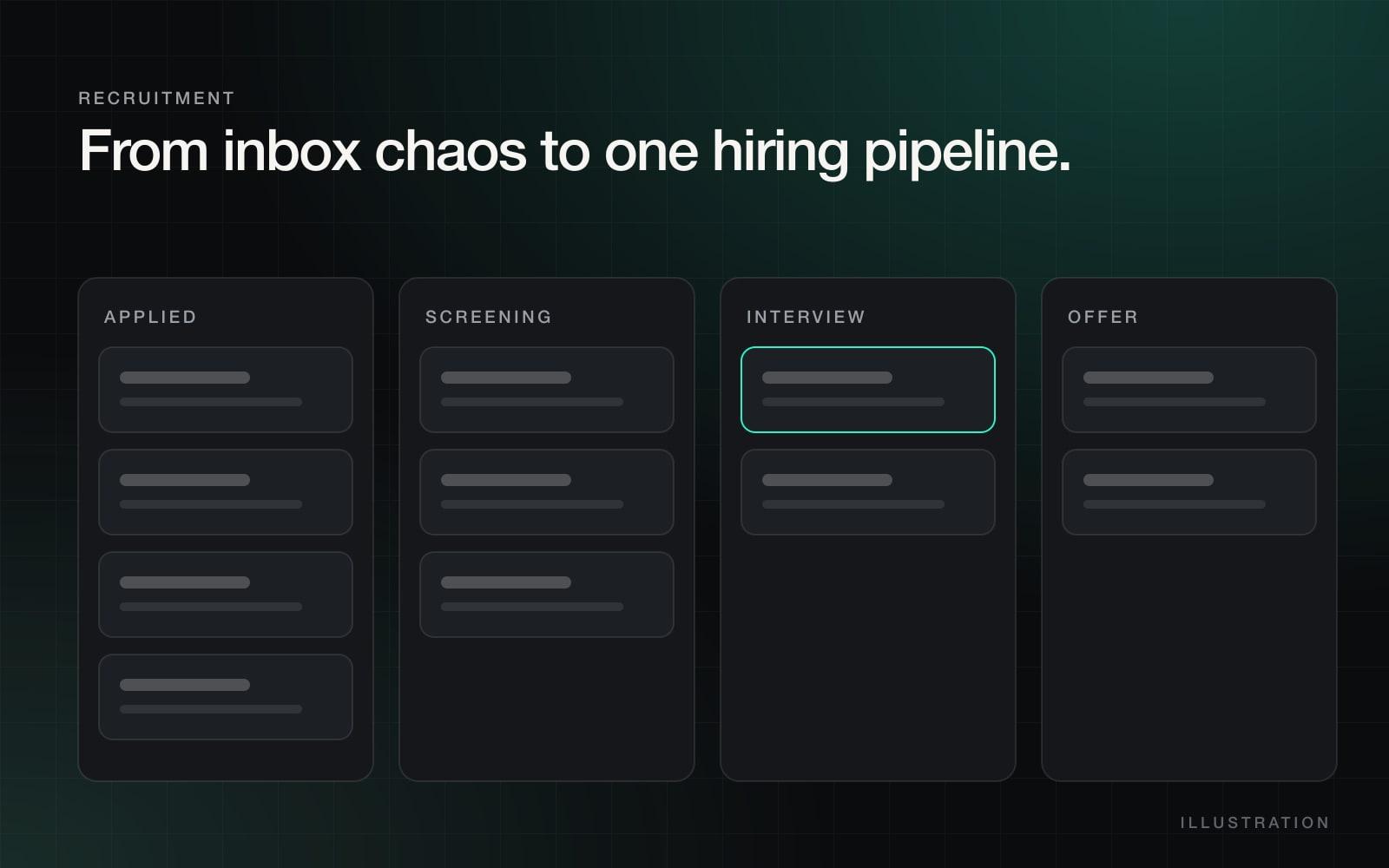
Recruitment: from inbox chaos to one hiring pipeline
A hiring module inside the ERP that turned scattered CVs, WhatsApp threads and interview notes into a single pipeline every manager can see.
UAE · ERP and business automation
ERP and business automation for Abu Dhabi companies working with government, industry and large projects.
Overview
Abu Dhabi businesses often work on longer, more formal engagements than their peers in other emirates, with approvals, documentation and compliance trails that have to be exact. I build ERP modules and automation that make those formal processes faster and easier to audit, starting with the one that costs your team the most hours.
The Abu Dhabi market
Abu Dhabi is the capital of the UAE and the base of much of its energy, industrial, government-related and financial activity. Its economy is more weighted toward large organisations and their supply chains than Dubai's, including contractors, equipment suppliers, engineering firms and service providers working for them. Industrial zones such as KEZAD and the Abu Dhabi Global Market financial free zone host many companies, and procurement here often involves tenders, approvals and documentation at each stage.
Industries
Tender responses, bills of materials and long procurement cycles that depend on tracked documents and approvals.
Subcontractor management, progress claims and site purchasing that benefit from a single project record.
Suppliers who must prove compliance, delivery and invoicing at each step of a formal process.
Client onboarding, document control and approval flows that need a clear audit trail.
Regulated, recurring orders with approved vendor lists and strict receiving and records.
What I build
A custom ERP is built module by module, so the first piece is useful in weeks rather than after a year-long programme.
Purchasing, inventory, sales, finance handoffs and HR flows built around how your business actually runs.
Requests, sign-offs and handoffs that move on their own and leave an audit trail, instead of living in chat threads.
Your accounting tool, e-commerce channels, couriers and spreadsheets connected so data is entered once.
Reading documents, emails and invoices into structured records, with a review queue for anything ambiguous.
Management numbers across departments in one place, built on the same data the teams work in.
Documentation, training and monitoring, so the system belongs to your team and not to me.
Local considerations
VAT
The UAE applies value added tax at a standard rate of 5 percent across all emirates, so Abu Dhabi companies follow the same federal rules as those in Dubai. Registration is mandatory above a threshold of taxable supplies and optional below it, and treatment can differ for designated free zone activity. For companies selling to government-related customers, tax invoices must be accurate and consistently formatted, which is where the ERP helps. Confirm current rules with a qualified UAE tax adviser.
Time-zone overlap
Abu Dhabi uses Gulf Standard Time, four hours ahead of UTC with no daylight saving, the same as Dubai. I work from Pakistan, one hour behind, so almost the whole working day overlaps. Meetings are easy to schedule in normal business hours.
Other things to plan for
General information only, not tax or legal advice. Confirm rates and rules with your accountant before acting on them.
Relevant work
Chosen for industry fit, not because the work was done in Abu Dhabi. I work remotely, and these are all work I shipped.

A hiring module inside the ERP that turned scattered CVs, WhatsApp threads and interview notes into a single pipeline every manager can see.

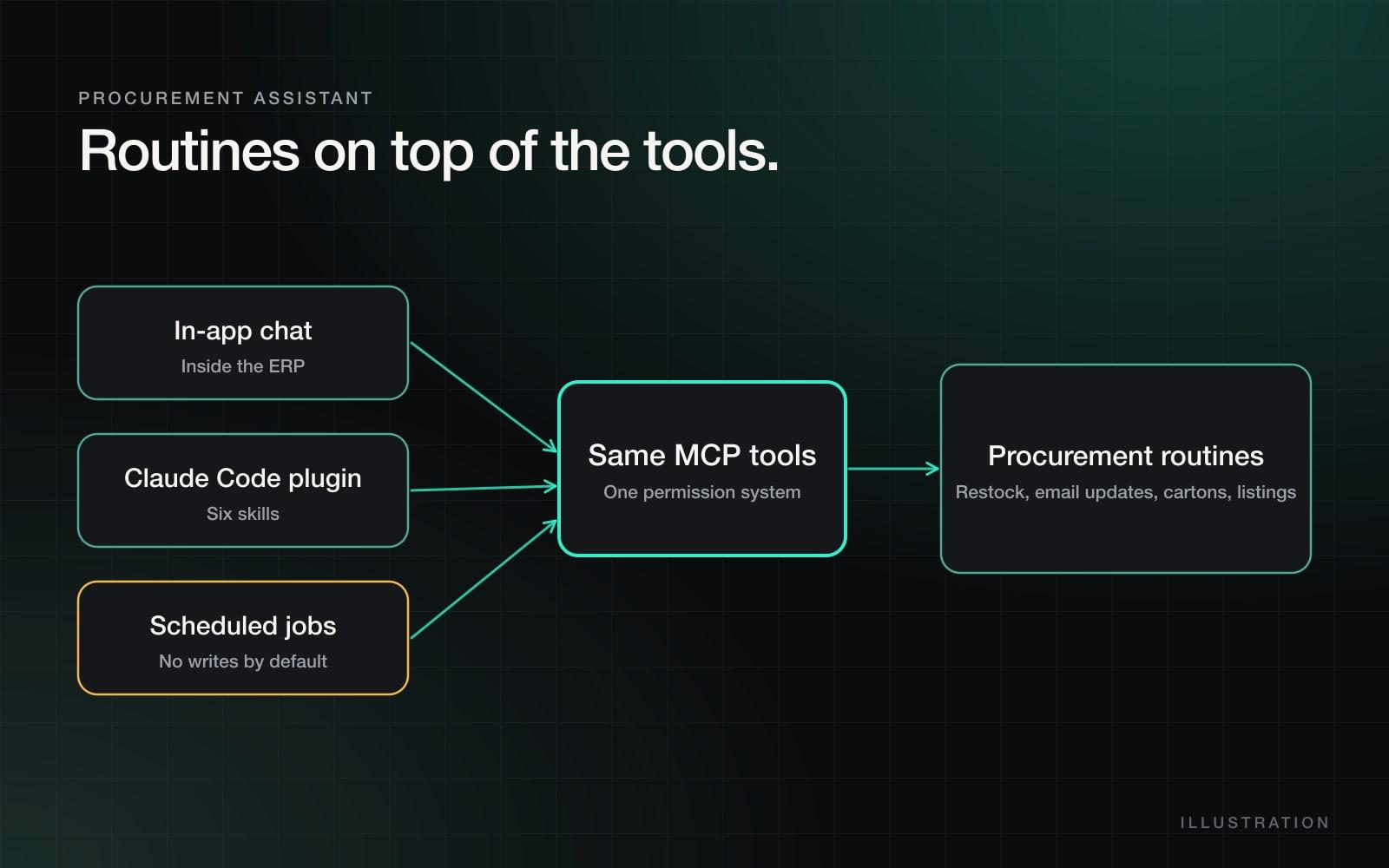
An in-app chat assistant, scheduled jobs and a Claude Code plugin of six skills that turn the ERP's tools into daily procurement routines, with write access kept away from anything unattended.

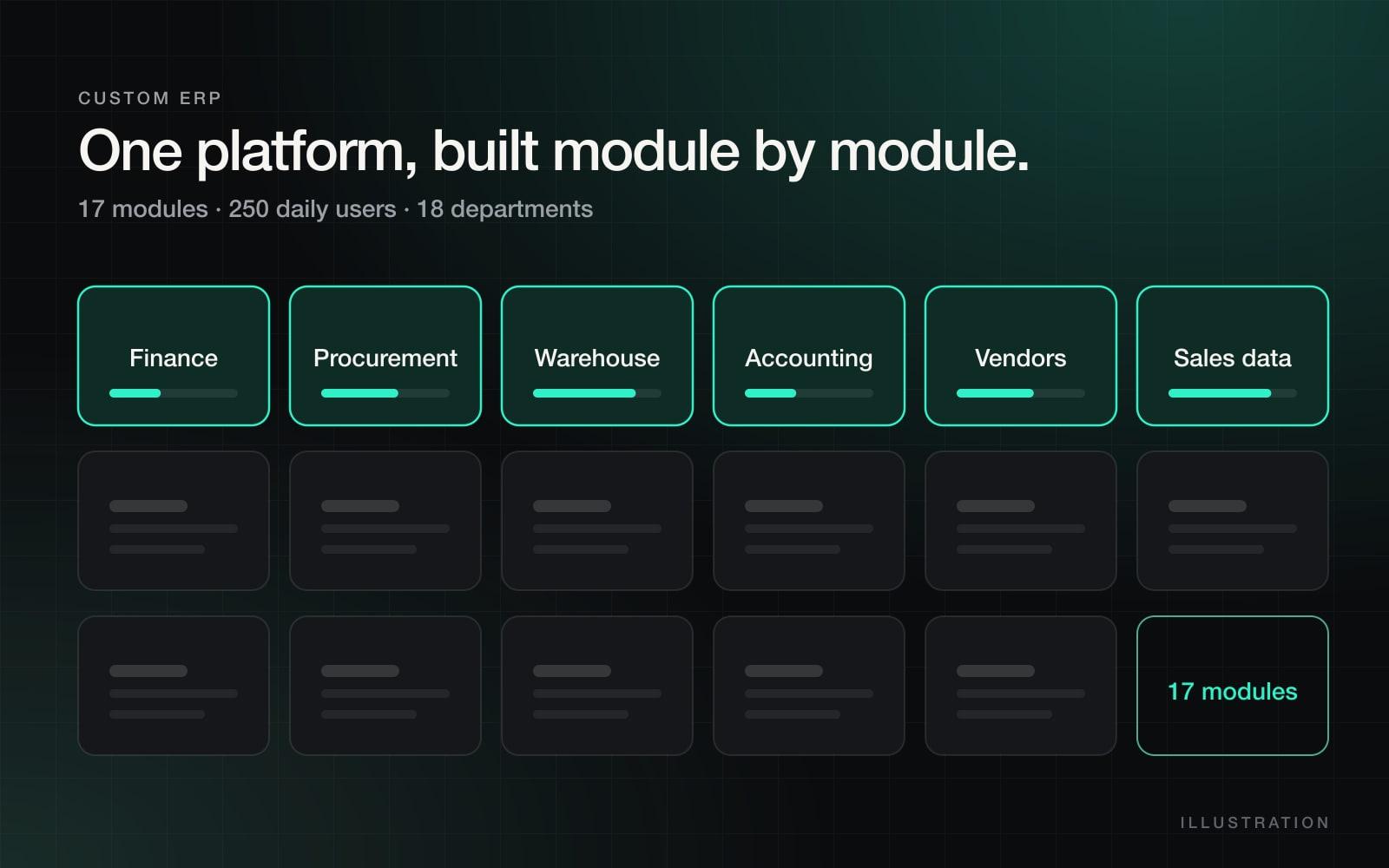
One system replacing a decade of parallel spreadsheets at Amazify, built module by module across 18 departments without stopping the business, and maintained as their web partner for four years since.
Process
I watch the work being done, not described, and write down every manual step, including the ones nobody documents.
We choose the module that pays back first and agree a fixed scope, price and date.
Short cycles with working software in front of your team early, so feedback arrives while it is still cheap.
Documentation, training and monitoring, with credentials and ownership held by you.
FAQ
Yes. I work remotely from Pakistan, one hour behind, so calls fit a normal Abu Dhabi working day. I do not have an office in the UAE.
It can help with the repeatable parts: collecting quotes, recording approvals against a threshold and keeping documents attached to the right job. Policy decisions stay with your team, and I build the workflow to match.
Every approval and change is recorded with who did it and when, so a manager can answer where a decision came from without searching email.
Often, yes. Where you host depends on your policies, and I would rather agree it at the start than change it later. I build to work on infrastructure you control.
Whichever repeated process costs the most hours, usually purchasing and approvals, document control or inventory. A short audit ranks them so the first module is chosen on evidence.
Next step
Thirty minutes. Bring one process that keeps breaking and we will map what it would take to automate it, whether or not you hire me.