Echelon Fit: 3× online revenue with FitPass memberships
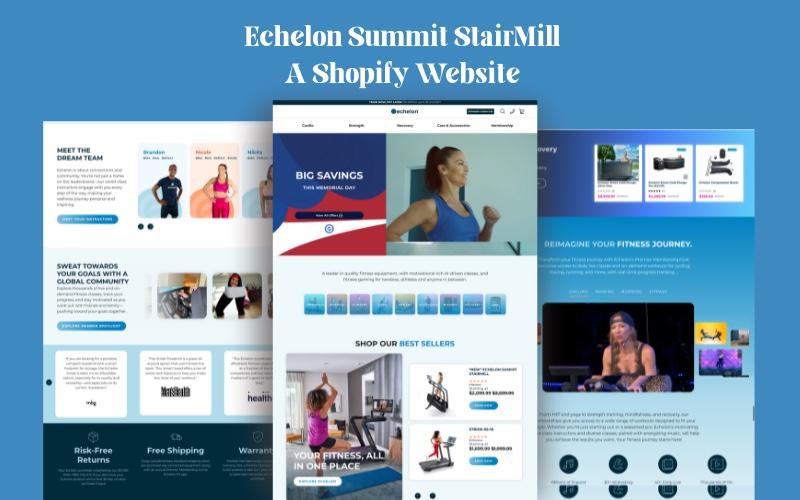
A storefront for connected home-gym equipment with model comparison, financing and FitPass membership tiers. Reported: triple the online revenue, memberships at 40% and 28% lower bounce.
City · Shopify automation
Shopify operations for San Francisco brands that sell subscriptions, hardware and software-adjacent products.
Overview
San Francisco brands are often built by people who came from software, and they bring a taste for subscriptions, analytics and tidy data to commerce. I work with Shopify teams in the Bay Area to connect the store to the rest of their stack and remove the manual reconciliation that stops a small team from scaling.
Brands in San Francisco
The Bay Area has a concentration of venture-backed consumer startups, connected hardware companies and design-led brands, often founded by engineers and product people. Many sell recurring subscriptions or products with an app or software component, and they expect their operations data to be clean enough to analyse. Teams are small and expensive, so every hour freed from manual order and support work is worth more than it would be elsewhere.
Industries
Serial numbers, warranty cases and software-linked purchases that touch the store, support desk and app backend.
Renewal, pause and churn flows that need to stay in step across billing, store and email.
Fast-changing catalogues and small-batch production that make inventory accuracy harder.
What I automate
The same operations work, whichever market you sell from. Everything below ends up in production and is handed over with documentation.
Store, apps and 3PL kept in sync, with an alert when something does not match instead of a manual morning check.
One source of truth for stock and product data, so a change is made once rather than in every system.
The repetitive parts of returns and exchanges handled automatically, with people on the cases that need judgement.
The numbers your team opens Shopify for, delivered before the meeting rather than pulled during it.
Reading, classifying and filing records your team copies by hand, validated before they save.
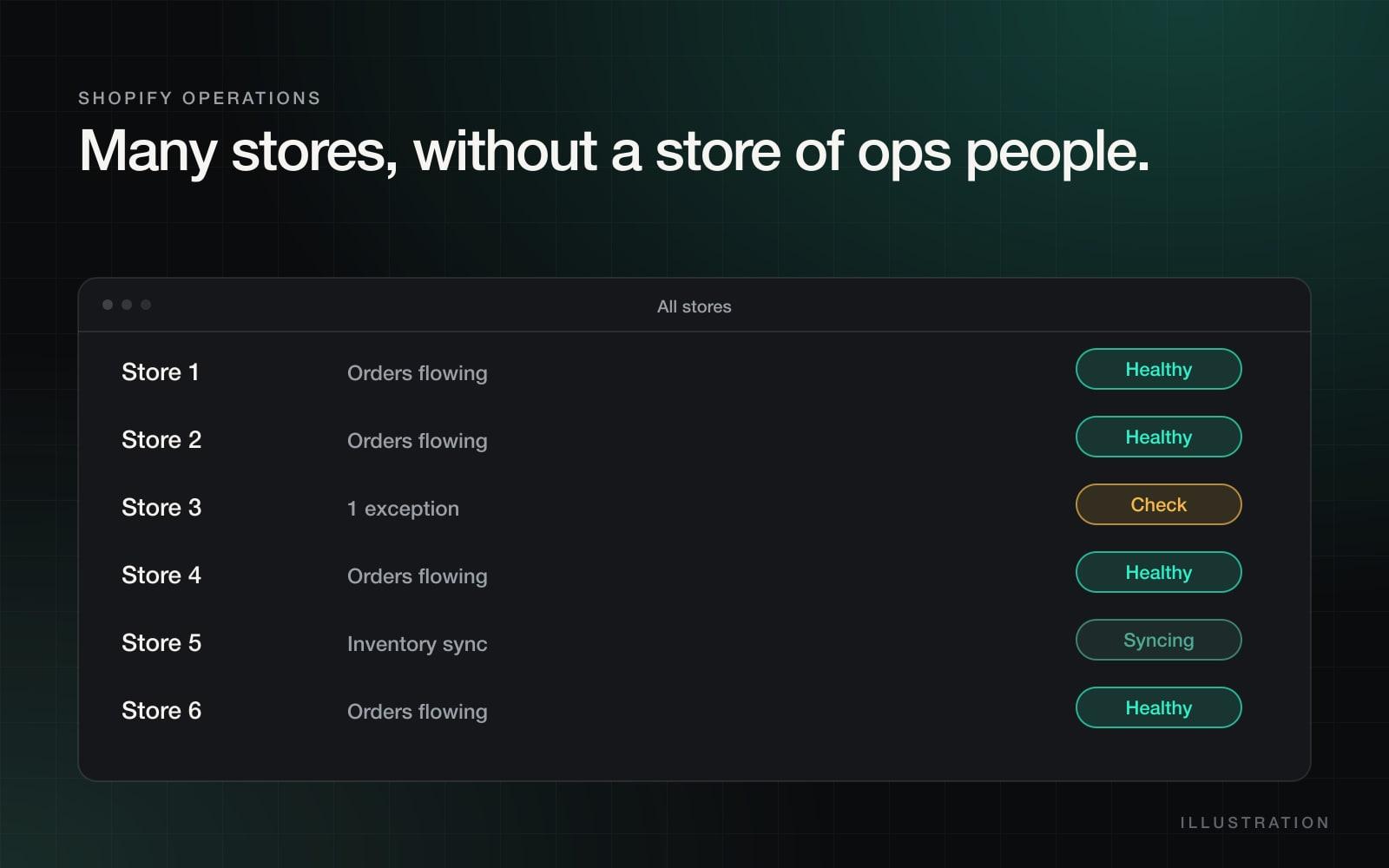
Exception-based operations: the day starts with what broke, not a checklist of things that were fine.
Relevant work
Chosen for industry fit, not because the work was done in San Francisco. I work remotely, and these are all work I shipped.

A storefront for connected home-gym equipment with model comparison, financing and FitPass membership tiers. Reported: triple the online revenue, memberships at 40% and 28% lower bounce.

Automation and shared operating systems across a portfolio of Shopify stores and 40+ web properties, so adding a store does not mean adding headcount.
FAQ
Usually because the repetitive operations work is not the best use of that engineer's time. I build it, document it and hand it over so they can maintain it if they choose to.
Often, yes. A common case is syncing order, subscription or serial number data to an internal system so support and operations see the same record. The details depend on what your backend exposes.
I work from Pakistan, so calls happen at the start of your day, which is the end of mine, and I keep written updates detailed enough that you are rarely waiting on me.
Up one level
Also in California
Next step
Thirty minutes. Bring one process that keeps breaking and we will map what it would take to automate it, whether or not you hire me.