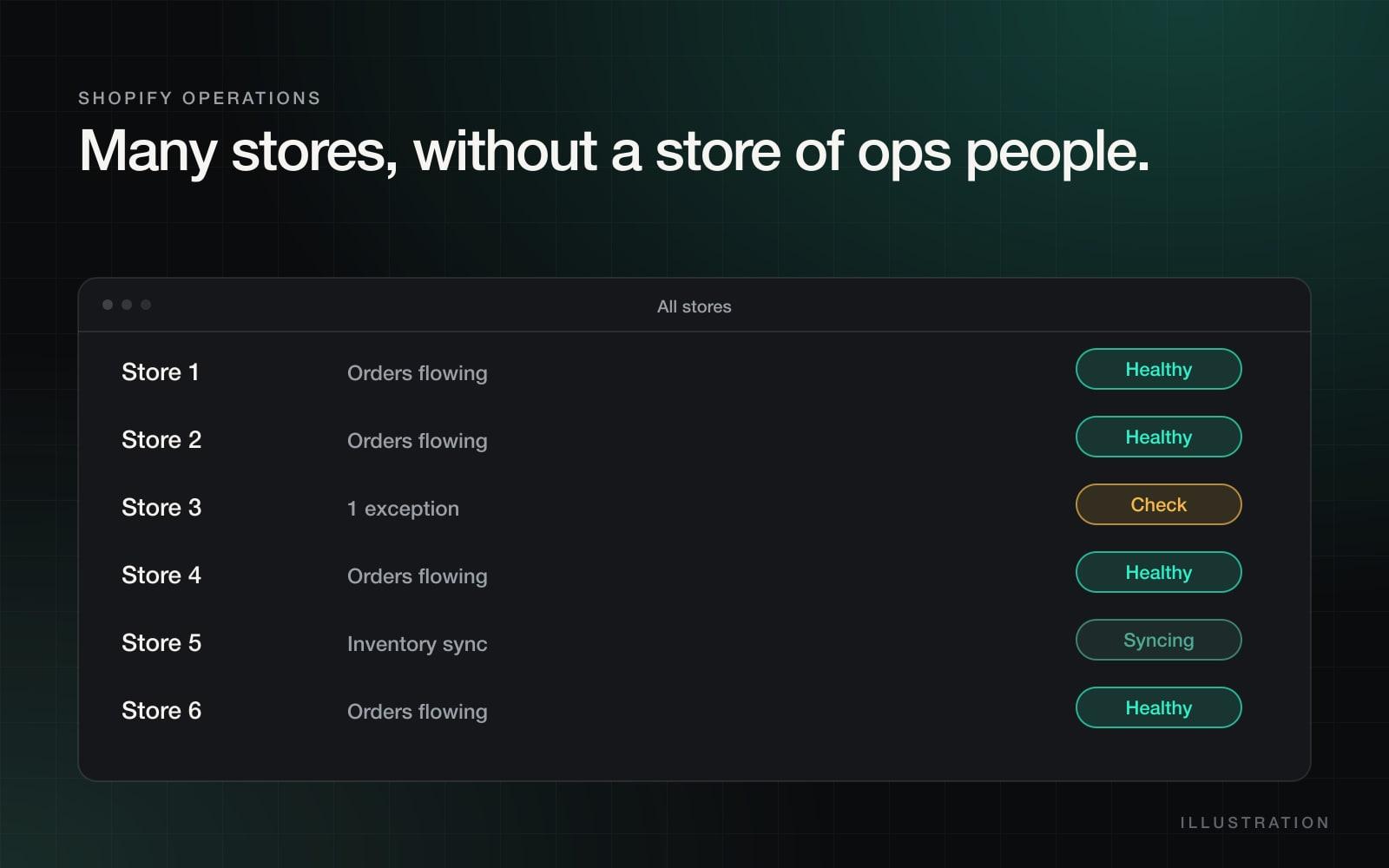
Running 17+ Shopify stores without 17 ops people
Automation and shared operating systems across a portfolio of Shopify stores and 40+ web properties, so adding a store does not mean adding headcount.
City · Shopify automation
Shopify automation for Dallas brands that sell online, wholesale and through retail partners.
Overview
Dallas is a distribution and trade city, so brands based here are often selling to retailers and wholesale buyers as well as direct to consumers. I help Dallas Shopify teams keep one accurate record of orders and stock across those channels, and cut the manual reconciliation between them.
Brands in Dallas
Dallas and the wider Dallas-Fort Worth area are a major centre for retail, logistics and trade shows, with the Dallas Market Center a well-known wholesale venue for gift, home and apparel buyers. Many brands in the area wholesale to boutiques and larger retailers in addition to running an online store. Selling both ways means two order formats, two sets of customers and a stock pool that has to serve both without being oversold.
Industries
Trade-show orders and repeat boutique accounts alongside the consumer store.
Retail listings and DTC sales sharing the same batches of stock.
Brands that use the region's warehouses and need tight sync between the store and the warehouse system.
What I automate
The same operations work, whichever market you sell from. Everything below ends up in production and is handed over with documentation.
Store, apps and 3PL kept in sync, with an alert when something does not match instead of a manual morning check.
One source of truth for stock and product data, so a change is made once rather than in every system.
The repetitive parts of returns and exchanges handled automatically, with people on the cases that need judgement.
The numbers your team opens Shopify for, delivered before the meeting rather than pulled during it.
Reading, classifying and filing records your team copies by hand, validated before they save.
Exception-based operations: the day starts with what broke, not a checklist of things that were fine.
Relevant work
Chosen for industry fit, not because the work was done in Dallas. I work remotely, and these are all work I shipped.

Automation and shared operating systems across a portfolio of Shopify stores and 40+ web properties, so adding a store does not mean adding headcount.

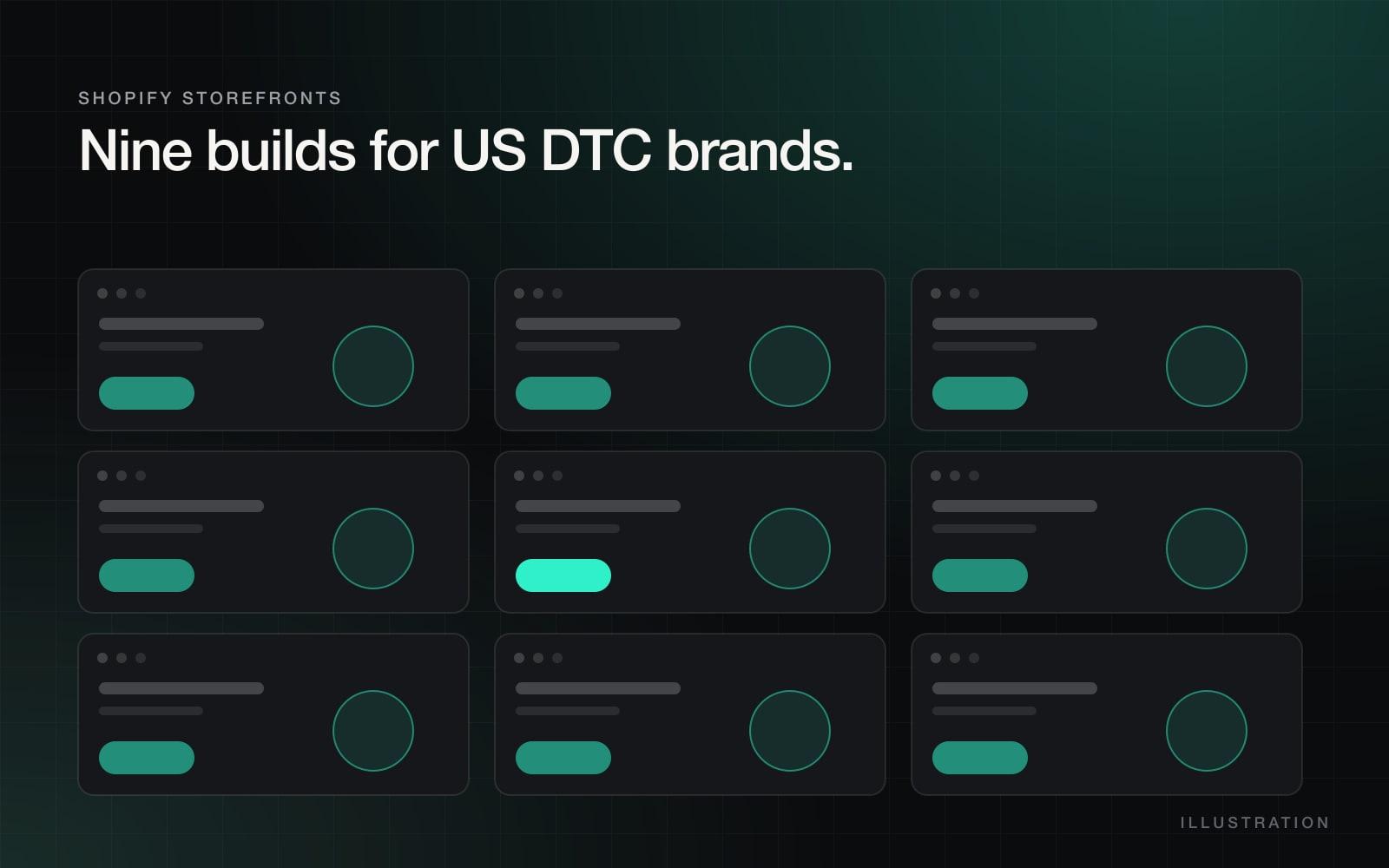
Nine storefront builds for US beverage, wellness and fitness brands. Subscriptions, flavour discovery and checkout work, with the client-reported result on each one.
FAQ
Often, yes. A common approach is reading incoming purchase orders into a structured record, checking stock and creating the order for review, so a person approves rather than re-types.
That is the usual goal. I connect each source of orders to one stock record and add a mismatch alert, so you stop selling product that is already promised to a buyer.
I work with whichever warehouse you already use, through their API or the file feeds they offer, wherever they are located.
Pricing starts from a fixed amount for an automation sprint, and you get a fixed scope and price after the audit, before I build anything. The services page lists the current starting prices.
Up one level
Also in Texas
Next step
Thirty minutes. Bring one process that keeps breaking and we will map what it would take to automate it, whether or not you hire me.