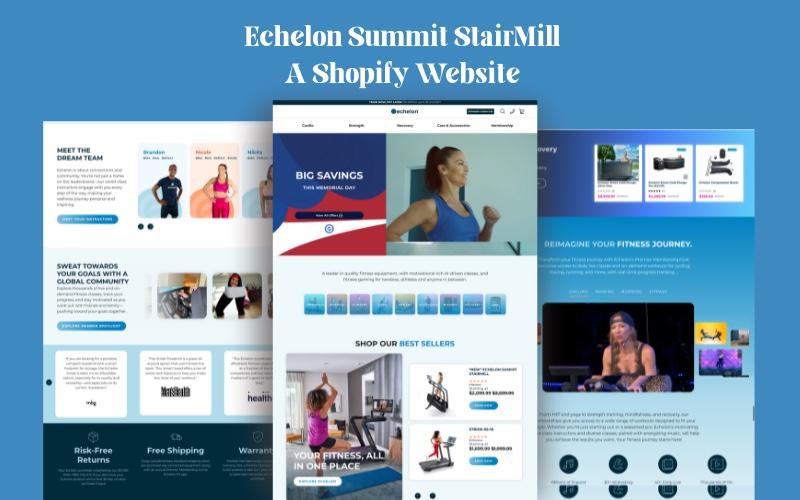
Echelon Fit: 3× online revenue with FitPass memberships
A storefront for connected home-gym equipment with model comparison, financing and FitPass membership tiers. Reported: triple the online revenue, memberships at 40% and 28% lower bounce.
State · Shopify automation
Shopify automation for Washington brands run by technical teams that expect their systems to be tidy.
Overview
Washington has an unusually technical customer and founder base, which means brands here expect clean data, reliable integrations and tools that work properly. I help Washington Shopify brands connect the store, the warehouse and the reporting so their operations are as well-built as their product.
The Washington market
The Seattle area is shaped by large technology and online retail employers, and a lot of founders here have an engineering background. That produces brands that care about analytics, experimentation and subscription models, as well as an outdoor and coffee culture with a strong local identity. Washington also has direct access to Pacific trade routes through its ports, and a customer base comfortable buying online. Teams tend to be technically capable but small, so automation is about saving scarce attention rather than adding more tools.
Industries
Technical products with many variants, repairs and warranty claims, and strong seasonal peaks around the ski and hiking seasons.
Subscription-heavy, with roast dates, shipment cadence and wholesale accounts to keep consistent.
Hardware, accessories and software subscriptions sold together create support and returns cases that span several systems.
Regulated shipping rules and age verification add steps that must be tracked order by order.
Customers ask detailed questions about materials and sourcing, which pushes teams to keep product data consistent.
What I automate
The same operations work, whichever market you sell from. Everything below ends up in production and is handed over with documentation.
Store, apps and 3PL kept in sync, with an alert when something does not match instead of a manual morning check.
One source of truth for stock and product data, so a change is made once rather than in every system.
The repetitive parts of returns and exchanges handled automatically, with people on the cases that need judgement.
The numbers your team opens Shopify for, delivered before the meeting rather than pulled during it.
Reading, classifying and filing records your team copies by hand, validated before they save.
Exception-based operations: the day starts with what broke, not a checklist of things that were fine.
Local considerations
Sales tax
Washington has no personal income tax but does charge sales tax, and rates vary by the delivery address because the state uses destination-based rules for remote sales. It also taxes business revenue through a gross receipts tax known as B&O, which is separate from sales tax. Shopify can apply the right rate at checkout when set up correctly, and I can build reporting by destination. Confirm current rules and any thresholds with your accountant.
Time-zone overlap
Washington is on Pacific time, so your morning is my late evening. A 9 am Pacific call lands at roughly 9 to 10 pm for me depending on daylight saving. I plan for that with calls at the start of your day and detailed written updates you can read when you open your laptop.
Other things to plan for
General information only, not tax or legal advice. Confirm rates and rules with your accountant before acting on them.
Relevant work
Chosen for industry fit, not because the work was done in Washington. I work remotely, and these are all work I shipped.

A storefront for connected home-gym equipment with model comparison, financing and FitPass membership tiers. Reported: triple the online revenue, memberships at 40% and 28% lower bounce.

A flavour-forward storefront with Sip Society subscriptions and interactive taste tours, built to turn first-time tasters into subscribers. Reported: double the sales and half the bounce rate.

Nine storefront builds for US beverage, wellness and fitness brands. Subscriptions, flavour discovery and checkout work, with the client-reported result on each one.
Process
I watch the work being done and write down every manual step, ranked by what it costs per month.
We pick the first step worth automating and agree a fixed price and date before any code is written.
It runs in production alongside the manual process until it has proved itself on real data.
Documentation, a walkthrough with your team and two weeks of close support.
FAQ
Often yes, because the issue is bandwidth, not skill. I take on the repetitive integration and reporting work so your engineers or operators can stay on the product, and I hand it over in a form they can maintain.
Yes. I prefer to connect to what you already run rather than add another tool. I can push clean order, stock and return data into your existing reporting.
It is the widest gap of the US markets, so I schedule calls in your morning, which is my late evening, and keep async work detailed. Nothing urgent depends on me being awake at the same time as you.
It means the delivery address determines the rate, so clean address data matters. I build checks for incomplete addresses and reports by destination for your accountant.
I can build the order-side steps, such as flagging orders that need age verification or are going to restricted destinations, but I do not give legal advice. Your compliance adviser decides the rules, and I automate them.
No. I am a single person working remotely. You deal with me directly, and the work is documented so your own team can run it.
Next step
Thirty minutes. Bring one process that keeps breaking and we will map what it would take to automate it, whether or not you hire me.